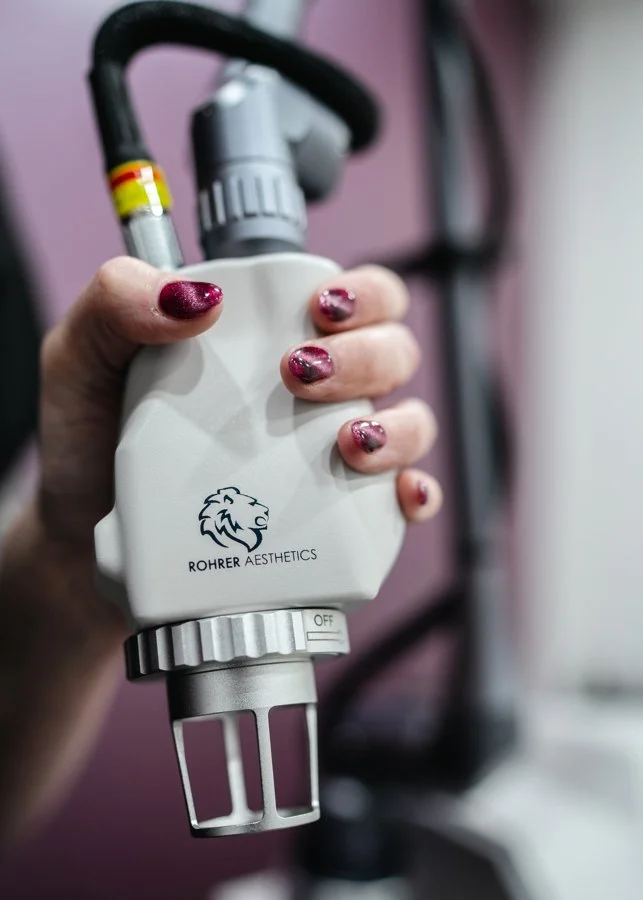
Fractional CO2 Laser Resurfacing: The Science Behind Collagen Remodeling and Skin Renewal
CO2 laser resurfacing remains one of the most powerful tools in aesthetic medicine for improving skin texture, treating acne scars, and stimulating collagen production. While many people have heard of CO2 laser treatments, fewer understand exactly how the technology works, why results continue to improve over time, and why proper patient selection and aftercare matter so much.
Understanding the science behind CO2 lasers can help patients make more informed decisions and set realistic expectations for treatment outcomes.
How CO2 Laser Technology Works
A CO2 laser emits light at a wavelength of 10,600 nanometers. This wavelength is strongly absorbed by water within the skin, which makes it highly effective for resurfacing procedures.
Because the skin contains a significant amount of water, the laser energy interacts directly with tissue. When the laser energy is absorbed, it causes vaporization of damaged skin cells while simultaneously delivering heat into deeper layers of the skin.
CO2 lasers are classified as ablative lasers, meaning they remove portions of tissue while also delivering controlled thermal energy to surrounding areas. This process creates an intentional, controlled injury to the skin.
The goal is not simply to remove surface damage. The thermal energy delivered deeper in the skin triggers a healing response that leads to skin remodeling and collagen regeneration.
Collagen Remodeling and Long-Term Skin Improvement
When controlled injury occurs in the skin, the body begins a natural repair process. This process activates fibroblasts, which are specialized cells responsible for producing collagen and providing structural support to the skin.
Fibroblast activation leads to a process called neocollagenesis, which refers to the formation of new collagen fibers. Unlike temporary swelling or short-term tightening, this process results in gradual production of healthier, more organized collagen.
Collagen remodeling takes time. For most patients, this process continues for several weeks to several months after treatment, which is why results from CO2 laser resurfacing often continue improving long after the initial healing period.
Fractional CO2 vs. Fully Ablative CO2 Treatments
Patients often hear the terms fractional CO2 and full-field CO2 resurfacing, but these approaches are very different in terms of recovery, risk, and indications.
Full-field CO2 resurfacing treats nearly the entire surface of the skin. While it can produce dramatic results for severe sun damage or deep wrinkles, it also carries significantly greater risks. These risks include infection, prolonged redness, hyperpigmentation, and scarring. Because of this, fully ablative resurfacing is typically performed under sedation by experienced surgeons in carefully selected patients.
Most modern aesthetic practices use fractional CO2 technology.
Fractional CO2 lasers treat only a targeted percentage of the skin rather than the entire surface. The laser creates thousands of microscopic treatment zones while leaving surrounding tissue intact.
These untreated areas act as bridges of healthy skin, allowing the tissue to heal faster through a process called re-epithelialization. The intact tissue also reduces the risk of complications such as scarring or post-inflammatory hyperpigmentation.
Fractional treatments can be adjusted to deliver very light resurfacing or more moderate levels of ablation, depending on the patient’s skin condition and treatment goals.
What “Cool CO2” or “CoolPeel” Actually Means
Terms such as Cool CO2 is often use in marketing, or you may hear the term CoolPeel which is a trademarked name of a laser service provided by a specific manufacturer. May consumers wrongly assume the treatment involves no downtime, discomfort, or risk.
In reality, these terms simply refer to more controlled fractional delivery of energy. The treatment pattern and settings are designed to limit the depth and density of thermal injury, which may reduce downtime compared to more aggressive resurfacing.
However, it is still a laser resurfacing procedure and should be approached with the same understanding of risks, preparation, and aftercare.
Common Indications for CO2 Laser Resurfacing
CO2 laser resurfacing is commonly used to address a variety of skin concerns. Some of the most common indications include:
Acne scarring
Skin texture irregularities
Fine lines
Deeper wrinkles
Photodamage and sun damage
Mild skin laxity
It is important to set realistic expectations. CO2 laser resurfacing can tighten and improve the quality of the skin, but it does not replace surgical procedures such as blepharoplasty, facelift, or neck lift when excess skin is present.
In cases where structural changes are needed, surgical intervention may still be the most appropriate treatment.
What Influences CO2 Laser Results
All CO2 lasers are not identical, as they are manufactured by different companies with different technologies. However, similar outcomes can often be achieved when treatments are performed properly.
Several factors influence the final outcome of a CO2 laser treatment, including:
Laser settings used by the provider
Technique and experience of the operator
Patient selection
Skin preparation before treatment
Adherence to post-treatment care instructions
Proper patient preparation and aftercare play a critical role in minimizing risks such as infection or hyperpigmentation.
Who Is Not a Good Candidate for CO2 Laser
Not every patient is an appropriate candidate for CO2 resurfacing. Contraindications may include:
Impaired wound healing
Active skin infections
Recent isotretinoin use
Uncontrolled diabetes
Use of immunosuppressive medications
Recent sun exposure or tanning
Inability to comply with post-treatment care
Patients with a history of cold sores should also be treated prophylactically prior to treatment to reduce the risk of viral reactivation.
Melasma-prone patients are not automatically excluded, but they may require pre-treatment skin conditioning with tyrosinase inhibitors to reduce the risk of post-inflammatory hyperpigmentation.
CO2 Laser and Skin Tone Considerations
CO2 lasers interact primarily with water in the skin, not melanin. However, melanin can still absorb some of the energy delivered during treatment.
In patients with darker skin tones, this absorption can increase the risk of complications such as:
Post-inflammatory hyperpigmentation
Uneven skin tone
Hypopigmentation
Delayed healing
Scarring
For this reason, CO2 resurfacing is generally approached with caution in darker skin types. When it is used, treatment settings must be conservative, and patients require careful skin preparation and strict aftercare.
Alternative treatments such as RF microneedling, Pico lasers, or Q-switched lasers using a 1064 nm wavelength may be safer options for collagen stimulation in these patients.
Potential Risks of CO2 Laser Resurfacing
Although CO2 laser resurfacing can provide significant improvement in skin quality, it does carry potential risks.
These may include:
Prolonged redness and swelling
Acne flare-ups
Infection
Cold sore reactivation
Post-inflammatory hyperpigmentation
Scarring
Most complications occur when patients are not appropriate candidates or when aftercare instructions are not followed closely.
Combination Treatments and “Stacking” Protocols
In some cases, combining multiple treatments can produce better outcomes than performing a single modality alone.
These approaches are often referred to as stacking protocols.
When treatments are layered, they are performed in a specific order based on the depth of tissue they target. Deeper treatments are performed first to create structural changes in the skin, followed by more superficial treatments to refine surface texture.
A treatment plan may include combinations such as:
Pico laser for pigment and collagen stimulation
Microneedling or RF microneedling for deeper tissue remodeling
Fractional CO2 resurfacing to improve texture and scarring
Erbium laser polishing to refine the surface
When done correctly, stacking treatments can reduce the number of separate visits required and consolidate recovery into a single downtime period.
Recovery and Healing After CO2 Laser
Recovery time varies depending on the intensity of treatment.
Patients may experience redness, swelling, and small areas of crusting during the healing phase. After fractional laser resurfacing, tiny columns of treated tissue migrate toward the surface of the skin.
This material is sometimes referred to as MENDS, which stands for microscopic epidermal necrotic debris.
MENDS may appear as small tan or brown dots, pinpoint crusting, or mild tissue weeping. This is a normal part of the healing process as damaged tissue is gradually shed and replaced with new epidermal cells.
Picking or scrubbing the skin during this phase can increase the risk of scarring and should be avoided.
Post-Treatment Care and Skin Barrier Support
Aftercare is essential following laser resurfacing. The primary goals of aftercare include:
Cooling the skin
Reducing inflammation
Supporting barrier repair
Hydrating the skin
Protecting the skin from sun exposure
Cool compresses and vinegar soaks are sometimes used after resurfacing procedures. Diluted acetic acid from vinegar helps restore the skin’s acidic environment and may provide mild antimicrobial benefits while the skin barrier is disrupted.
Once the skin has re-epithelialized and there are no open channels, mineral sunscreens containing zinc oxide or titanium dioxide should be introduced.
Consistent sun protection is critical for several months after treatment because melanocytes remain reactive long after the surface of the skin appears healed.
CO2 Laser and Genitourinary Syndrome of Menopause
CO2 laser technology is also being studied as a potential treatment for genitourinary syndrome of menopause (GSM).
GSM is a group of symptoms caused by declining estrogen levels and changes in vaginal tissue. Symptoms may include vaginal dryness, irritation, painful intercourse, recurrent urinary infections, and reduced tissue elasticity.
Fractional CO2 laser treatments may stimulate collagen remodeling and improve tissue hydration within the vaginal canal. However, laser therapy is typically only one part of a comprehensive treatment approach.
Many patients still benefit from therapies such as vaginal estrogen, DHEA, non-hormonal moisturizers, lubricants, or pelvic floor physical therapy.
Treatment plans should be individualized based on symptoms, medical history, and patient goals.
Final Thoughts
CO2 laser resurfacing is a powerful tool for improving skin texture, acne scars, and signs of photodamage. However, successful outcomes depend on careful patient selection, appropriate treatment settings, and strict adherence to aftercare.
Fractional approaches have improved the safety profile of CO2 lasers, allowing many patients to achieve meaningful improvements in skin quality with reduced downtime compared to traditional resurfacing.
For many patients, CO2 laser treatments work best as part of a comprehensive skin rejuvenation strategy that may include additional laser therapies, microneedling, biostimulators, or other modalities tailored to individual needs.
Learn More About CO2 Laser Resurfacing
CO2 laser resurfacing is one of the most effective technologies available for improving skin texture, stimulating collagen production, and addressing acne scarring and photodamage. However, successful outcomes depend on proper patient selection, appropriate treatment settings, and strict adherence to pre- and post-treatment care.
Because this treatment is often misunderstood or oversimplified online, we recorded a full educational discussion explaining how CO2 laser resurfacing actually works, what realistic expectations should be, and how we approach treatment planning in clinical practice.
If you would like a deeper explanation of the science, safety considerations, and treatment strategies discussed in this article, you can listen to the full episode of the Aesthetically Awkward Podcast here:
Listen to the episode:
https://podcasts.apple.com/us/podcast/aesthetically-awkward-podcast/id1856374577?i=1000749236627
In this episode we discuss:
How CO2 lasers interact with skin tissue
Why collagen remodeling continues for months after treatment
The difference between fractional and fully ablative resurfacing
How combination treatments can improve outcomes
What patients should realistically expect from recovery and results
The goal of the Aesthetically Awkward Podcast is to break down complex topics in aesthetics, health, and wellness into clear, honest conversations so patients can make informed decisions about their care.
If you are considering laser resurfacing and want to understand whether CO2 laser treatment is appropriate for your skin, starting with education is always the best first step.